
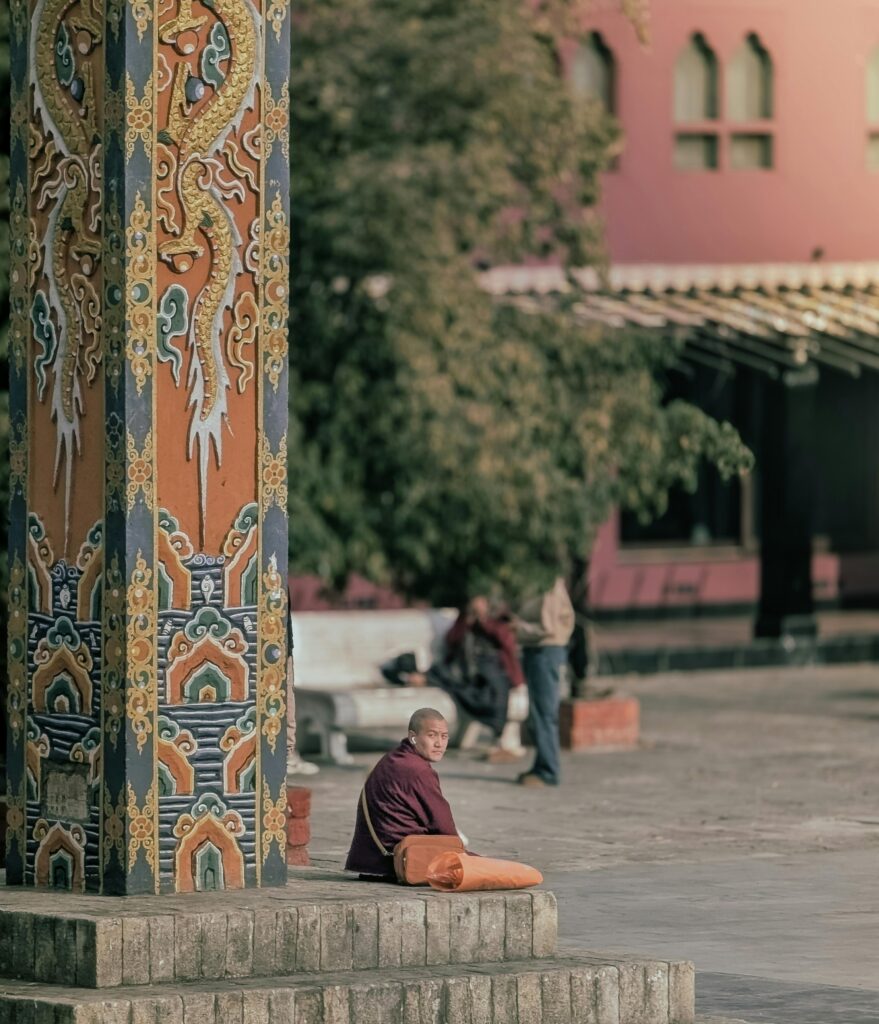
Overview
5 days/ 4 nights
places covered: Thimphu, Punakha, Wangduephodrang, Punakha
Uncover the magic of The Ethereal Kingdom.
Immerse yourself in Bhutan’s tranquil landscapes, timeless monasteries, and vibrant cultural heritage. This extraordinary journey offers a truly enchanting experience in the heart of the Himalayas—where tradition meets breathtaking natural beauty.
Itinerary
Day 01: Arrive Paro, Paro to Thimphu
In clear weather, a flight with Druk Air offers spectacular views of the Himalayan range. Whether approaching Bhutan from Kathmandu or flying in over the foothills from Kolkata, the journey is truly breathtaking—culminating in a dramatic descent through forested mountains into the kingdom.
Upon arrival at Paro International Airport, you will be greeted by your Etho Metho representative. After completing the arrival formalities, enjoy a scenic drive of approximately two hours to Thimphu, the capital city that seamlessly blends tradition with modernity.
The evening is at your leisure after dinner.
Overnight at a hotel in Thimphu.
Day 02: Thimphu - Punakha
Thimphu, one of the most unique capital cities in the world, serves as the administrative and political heart of Bhutan. This vibrant town is home to the royal family, civil service, foreign diplomatic missions, and the headquarters of several internationally supported development initiatives.
Your morning begins with a visit to Tashichhodzong, the impressive fortress that houses the throne room of His Majesty the King. It also serves as the summer residence of the Je Khenpo (Chief Abbot) and the central monk body.
Next, explore the National Library, which preserves an extensive collection of ancient Buddhist texts, some dating back several centuries. Nearby, visit the Institute for Zorig Chusum, commonly known as the Painting School, where students undergo a six-year training in Bhutan’s thirteen traditional arts and crafts.
From outside, view the National Institute of Traditional Medicine, where Bhutan’s rich array of medicinal herbs are prepared and dispensed using time-honored methods.
After lunch, visit the iconic National Memorial Chorten, envisioned by Bhutan’s third king, His Majesty Jigme Dorji Wangchuck, as a symbol of world peace and prosperity. Completed in 1974 following his untimely passing, it now stands as both a monument to peace and a memorial to the beloved monarch known as the “father of modern Bhutan.”
You’ll also have time to explore the Handicrafts Emporium and various privately owned craft shops, showcasing an array of traditional Bhutanese handcrafts—including exquisite thangkha paintings and finely woven textiles.
Continue with a visit to the Folk Heritage Museum and the National Textile Museum, both established in 2001 to preserve and promote Bhutan’s cultural traditions.
In the early evening, begin your journey to Punakha, crossing the scenic Dochu-La Pass (3,088m / 10,130ft), which offers panoramic views of the eastern Himalayas on clear days.
Overnight at a hotel in Punakha.
Day 03: Pumakha - Wangduephodrang - Paro
Punakha served as the capital of Bhutan until 1955, when the government relocated to Thimphu. Once nestled along the riverbanks and dominated by the majestic Punakha Dzong, the town was moved a few kilometers downstream in the early 1990s due to severe flooding. Around the same time, extensive restoration was carried out on the Dzong itself. Today, as you approach, the sight of Punakha Dzong—with its grand architecture and dramatic riverside setting—is truly breathtaking.
Despite suffering damage from four major fires and an earthquake in the past, the Dzong remains a vital cultural and spiritual center. It houses numerous sacred artifacts and historical treasures, including the embalmed remains of Zhabdrung Ngawang Namgyal, the unifier of Bhutan.
Later, we continue to Wangduephodrang, the last major town before entering central Bhutan. Perched on a ridge above the confluence of two rivers, the town is dominated by the impressive Wangduephodrang Dzong. Built in the 17th century, the Dzong played a crucial role in the unification of Bhutan’s western, central, and southern regions. You will also have the opportunity to visit the local market.
After lunch, we begin our journey back to Paro, with a stop at Semtokha Dzong en route. Built in 1627, it is the oldest Dzong in Bhutan and now houses the Institute for Language and Cultural Studies.
Upon arrival in Paro, check in to your hotel.
Overnight stay in Paro.
Day 04: paro
Paro Valley is rich in cultural and historical treasures. This morning, begin with a visit to Ta Dzong, originally constructed as a watchtower to protect Rinpung Dzong during the 17th-century inter-valley conflicts. In 1968, it was transformed into Bhutan’s National Museum, showcasing a diverse collection of Bhutanese art, artifacts, and historical relics.
From there, follow a scenic downhill trail to visit Rinpung Dzong, a fortress-monastery with a deep and captivating history.
After lunch, drive further up the valley to explore the ruins of Drukgyel Dzong, located 18 kilometers north of Paro town. This historic site marks the location from which Bhutanese forces successfully repelled several Tibetan invasions in the 17th century.
Next, visit Kyichu Lhakhang, one of Bhutan’s oldest and most sacred temples, believed to have been built in the 7th century. It holds great spiritual significance and symbolizes the introduction of Buddhism in Bhutan.
In the evening, visit a traditional Bhutanese farmhouse, where you’ll have a unique opportunity to interact with a local family and gain insight into their daily life and customs.
Later, enjoy a leisurely stroll along Paro’s main street, where you can browse local handicraft shops or relax with refreshments at a cozy café or bar.
Overnight at a hotel in Paro.
Day 05: Paro Airport
After breakfast, you will be transferred to Paro International Airport for your departure flight to your onward destination.